
fomo
fomo Labs Inc.Finance
4.6173.00 Reviews
- Version
- 1.92.1
- Installs
- 500.00K
- Age Rating
- Everyone
Screenshots
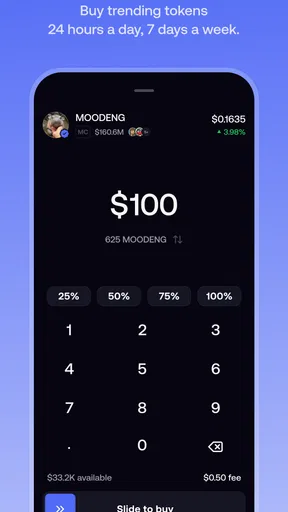
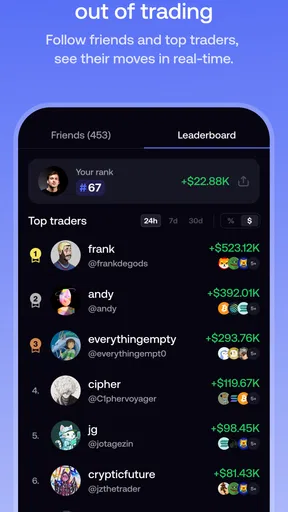
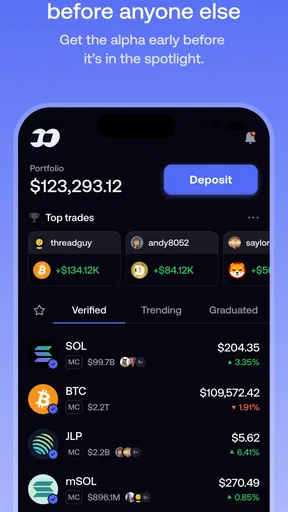
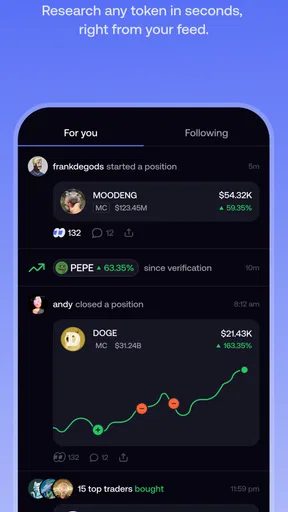
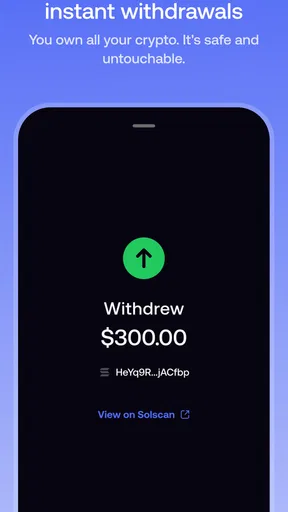
Our Review of fomo
 Analysis by Appyee
What caught my attention about fomo is its focus on social trading rather than treating finance as a completely private activity. The app is designed around following friends, seeing what is attracting attention, and noticing trends early. That sounds simple, but it changes the way I think about a finance app: instead of opening it only when I already have a decision in mind, I can use it as a place to observe what people around me are watching.
That central idea is also the reason I would not recommend it blindly to everyone. Social signals can make financial topics easier to discover, but they can also make fast-moving trends feel more urgent than they really are. In my experience, the useful approach is to treat the app as a discovery and discussion layer, not as a replacement for personal research or a carefully planned investment strategy.
Following people changes how financial trends appear
The app comes from fomo Labs Inc. and sits in the finance category, with a free entry point and an Everyone age rating. Its store summary presents it as a way to follow friends and get involved with major trends early, while the short description keeps things deliberately brief: “fomo.” That minimal presentation matches the product’s main appeal. It is less about presenting a long list of traditional financial tools and more about making market interest feel visible and social.
The capability worth focusing on is the ability to follow people and use their activity as a starting point for finding trends. A conventional finance app often begins with a search box, watchlist, chart, news feed, or account dashboard. Here, the social connection is closer to the front of the experience. I can begin with people I know or accounts I find interesting, then use what they are discussing or tracking as a prompt for further thought.
The important distinction is that social discovery is not the same as financial advice. Seeing several people pay attention to the same idea can tell me that a topic is gaining visibility, but it does not tell me whether the underlying opportunity suits my budget, risk tolerance, or time horizon. That distinction is easy to forget when a trend is presented through familiar people rather than through an anonymous market screen.
This makes fomo particularly interesting for users who find ordinary finance apps too isolated. If you already learn about companies, assets, or market themes through conversations with friends, the app gives that behavior a more direct home. It can help turn scattered conversations into something easier to revisit, compare, and follow over time.
What the social angle adds
Following friends can provide context that a standard watchlist does not. A watchlist tells me what I selected, but a social feed can show me what other people are paying attention to before I would have searched for it myself. That makes the app useful during the early stage of research, when I am collecting possibilities rather than making a final decision.
There is also a practical benefit for people who struggle to keep up with financial topics. Instead of trying to monitor every headline or browse a large market universe, I can begin with a smaller circle of people whose interests I understand. If a friend consistently follows technology-related themes, for example, their activity may help me notice subjects I would otherwise miss. I still need to verify the details elsewhere, but the initial discovery becomes less overwhelming.
The trade-off is that a social circle can narrow attention as easily as it can broaden it. If everyone I follow is interested in the same type of opportunity, the app may reinforce that preference rather than challenge it. I would therefore use the following feature deliberately, mixing familiar contacts with viewpoints that do not all react to the same trends.
How I would use it in a normal week
In practical use, I would approach fomo in three stages: observe, investigate, and decide. The first stage is where the app is most naturally helpful. I would check what people I follow are watching and note which themes appear repeatedly. I would avoid treating repetition as proof. It is simply a way to create a short list of subjects worth understanding.
The second stage would happen outside the rush of the social feed. Once something catches my attention, I would look at the company, asset, or broader trend through reliable financial sources and ask basic questions: What exactly is driving interest? Is the movement connected to a temporary story or a longer-term change? What could make the idea fail? This extra step matters because a social app can make discovery quick, while proper evaluation remains slower.
The final stage is deciding whether the idea belongs in my plan at all. Sometimes the right conclusion is to do nothing. That is not a failure of the app. In fact, one of its better uses may be helping me identify topics to understand without forcing me to act on every one. I would keep a clear separation between “interesting enough to investigate” and “appropriate for my money.”
A realistic everyday scenario would be checking the app during a lunch break after a friend mentions a market trend in a group chat. Rather than searching randomly, I could open the social view, see what that friend and others are following, and save the topic mentally for deeper research later. If the idea still looks sensible after I have considered the risks and my own goals, I can decide what to do. If not, I move on without having confused a conversation with a recommendation.
That workflow is more useful than opening the app whenever I feel anxious about the market. Frequent checking can turn social updates into emotional triggers. I would set a simple boundary: use the app to gather ideas at planned times, then make decisions away from the immediate excitement of the feed. This is one of the most important habits for getting value from a social trading product.
How to make following more useful
I would also avoid following people only because they are currently popular or because one of their ideas performed well. A better test is whether their interests help me learn something different. The value of a social feed comes from the quality and variety of the perspectives it surfaces, not merely from the number of accounts visible in it.
Another useful habit is to write down why a trend caught my attention before researching it. Was it the subject itself, the explanation behind it, or simply the fact that several people were discussing it? That small pause helps separate genuine interest from social pressure. It also makes it easier to review my own reasoning later instead of remembering only the excitement of the moment.
I would treat the app’s trend discovery as an early-warning system for topics, not as a timing tool. “Early” is especially subjective in finance. A trend can be new to me while already being widely known, and a popular theme can continue rising or reverse suddenly. The app may help me notice attention; it cannot remove uncertainty from the decision that follows.
Where it compares well with usual finance apps
Compared with a traditional finance app built around accounts, transactions, charts, or personal watchlists, fomo feels more conversational. Its strongest difference is the starting point: people and shared interest rather than a solitary dashboard. That can make financial discovery more approachable for someone who learns best through discussion.
On the other hand, a conventional research-focused app may be better when I already know what I want to analyze. If I need detailed historical information, structured comparisons, advanced charting, or a portfolio view, I would expect a specialist tool to be more suitable. The social layer is not automatically a substitute for those functions.
It also differs from a private spreadsheet or personal notes system. Those tools are excellent for documenting a plan and tracking whether I am following it. fomo is more useful before that stage, when I am looking outward and asking what deserves attention. I would happily use both: the app for discovery and conversation, and a more controlled system for recording decisions and limits.
The best fit is curious, disciplined users
The people who gain the most are likely to be newcomers who want a less intimidating way into financial topics, socially motivated learners, and experienced users who enjoy monitoring themes through a network of people. If you often discover ideas through friends and want a dedicated place to follow those signals, the app’s core capability makes sense.
It may also suit someone who feels that a standard watchlist becomes stale. A personal list reflects yesterday’s interests unless I actively update it. Following people can introduce fresh subjects without requiring me to predict every search term in advance. That is a meaningful convenience for broad exploration.
I would be more cautious recommending it to someone who is easily influenced by group enthusiasm, checks financial updates compulsively, or wants a fully private and highly structured investing workflow. If your priority is detailed analysis, strict portfolio control, or minimizing social pressure, a conventional finance application may be the better primary tool.
Beginners should also decide in advance what “following” means for them. It should mean observing and learning, not automatically copying. Before acting on any idea discovered through the app, I would check whether it fits my financial goals, how much loss I could tolerate, and whether I understand the risks. If I cannot explain the idea in plain language, I would not treat its popularity as a reason to proceed.
What the current app profile tells me
The app has reached over 500 thousand installs and holds a 4.7 average from around 3 thousand ratings, which suggests that its social approach has found an audience. It has also accumulated more than a hundred written reviews, giving prospective users a reasonable amount of public feedback to consider. I see those figures as signs of traction, not as proof that the experience will suit every financial style.
It was released on July 21, 2025, and the current version is 1.87.1. The minimum operating-system requirement is version 9, so compatibility should be straightforward for many Android users. Because the app is free, trying the basic experience does not require an upfront purchase, but the more important cost is attention: a social finance feed can influence how often and why I check market topics.
That attention cost is the limitation I would take most seriously. The same design that makes trends easy to notice can make them hard to ignore. A user who wants calm, deliberate investing may find the social framing distracting, especially during volatile periods. I would not install it expecting the app to tell me what to buy or sell. I would install it expecting a faster way to see what people are discussing.
My recommendation after using the concept seriously
fomo is most convincing when I judge it as a social discovery tool for finance. Its value comes from connecting people’s interests with emerging topics, giving me a more human starting point than a blank search field. Used with patience, it can help me find subjects to research, compare my assumptions with other perspectives, and stay aware of conversations that might otherwise pass me by.
I would recommend it to a friend who wants to explore financial trends with a community around them, provided that friend is comfortable keeping a firm line between observation and action. I would pair it with independent research and a private record of personal decisions. That combination preserves the app’s strongest advantage while reducing the risk of impulsive copying.
For someone seeking a complete investment workstation, a detailed portfolio tracker, or a quiet alternative to market noise, I would choose a different primary app. For someone who wants to understand what friends and other users are noticing, and who can resist turning every popular idea into a transaction, this free finance app offers a distinctive reason to open it. My final view is positive but measured: use fomo to broaden your questions, not to outsource your judgment.
Verdict
Strengths of fomo
- Simple interface makes event discovery quick and easy.
- Personalized suggestions can help users find relevant plans.
- Useful for discovering local events and activities.
- Social features make sharing plans with friends convenient.
- Regular updates can keep listings and recommendations fresh.
Limitations of fomo
- Some features may require account registration or personal data.
- Event information can vary in accuracy by location.
- Notifications may become excessive without careful settings.
- Availability of events depends heavily on your city.
- Some listings or premium features may include additional costs.
Similar Picks in This Category
View All
Google Wallet
Google LLC4.3

Airtel: Recharge, Bank & Loans
Airtel4.0

PayPal - Pay, Send, Save
PayPal Mobile4.2

DANA Indonesia Digital Wallet
PT Espay Debit Indonesia Koe4.5

Binance: Buy Bitcoin & Crypto
Binance Inc.4.8

Cash App
Block, Inc.4.7
Frequently Asked Questions
What is FOMO and what can I use the app for?
FOMO is an app designed to help users discover what is happening around them, including events, activities, places, and social experiences that may be worth joining. After exploring its interface, the main appeal is its focus on timely recommendations and local discovery. It can be useful for finding plans, staying connected with trends, and avoiding the feeling that you are missing something interesting nearby.
Is FOMO free to download and use?
FOMO can generally be downloaded at no initial cost, although the availability of certain features may depend on the app version, location, or optional purchases. Before installing, users should check the store listing for current pricing details, subscriptions, and in-app purchase information. Some content or experiences promoted through the app may also involve separate costs outside the application.
Does FOMO require an account or access to my location?
An account may be required to access personalized recommendations, save activities, interact with other users, or receive notifications. FOMO may also request location permission so it can show relevant nearby events and places. You can review or change these permissions in your device settings, but limiting location access may reduce the accuracy and usefulness of local discovery features.
Is FOMO safe for sharing personal information?
As with any social or discovery platform, you should review FOMO’s privacy policy before creating an account and avoid sharing information that is not necessary. Be careful when communicating with people you do not know, especially if the app includes public profiles, messaging, or event meetups. Use strong login details, check privacy controls, and meet unfamiliar contacts only in safe public locations.
What should I check before downloading FOMO?
Before downloading FOMO, confirm that your Android or iOS device meets the required operating-system version and that the app is officially available in your country. It is also worth checking recent user reviews, update history, permissions, privacy terms, and whether the events or recommendations in your area are sufficiently active. The app is most valuable when it has current local content that matches your interests.
